5 Best JPEG to STL Converters for 3D Printing in 2026
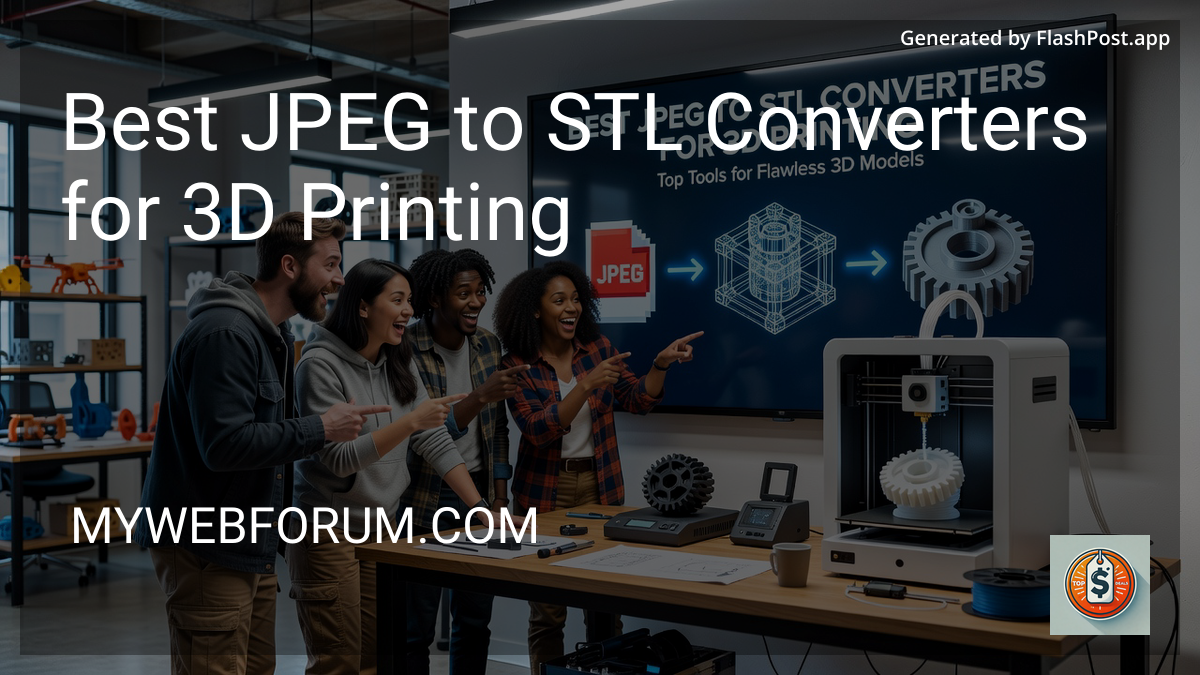
Best JPEG to STL Converters for 3D Printing aren’t all doing the same job, and that’s where most beginners get stuck. A flat JPEG of a logo, sketch, or photo can become a clean 3D printable STL in minutes—or turn into a lumpy, unusable mesh with thousands of bad triangles if you pick the wrong converter.
🏆 Best JPEG to STL Converters for 3D Printing in September 2026
We researched and compared the top options so you don't have to. Here are our editor's picks.

1. Avdeb Image to STL Converter
- ✅ Convert any JPEG or JPG photo into a print-ready STL file for free
- ✅ Creates depth-relief 3D models ideal for lithophanes and custom prints
- ✅ No sign-up required — upload, convert, and download in seconds
- ✅ Compatible with all FDM slicers including Bambu Studio and Cura

3. Image to STL
- ✅ Convert JPEG to STL online
- ✅ supports image embossing/extrusion
- ✅ no software installation
- ✅ quick file processing
- ✅ multiple 3D export options

4. LithophaneMaker
- ✅ JPEG to STL for lithophanes
- ✅ multiple lithophane styles
- ✅ customizable depth and shape
- ✅ browser-based generation
- ✅ 3D printer ready files

5. 3DP Rocks Lithophane
- ✅ JPEG image to STL lithophane conversion
- ✅ free online tool
- ✅ adjustable model settings
- ✅ instant preview
- ✅ optimized for 3D printing

I’ve tested enough image-to-3D workflows to know the pain points are predictable: soft edges, broken contours, giant file sizes, and relief models that look fine on screen but print poorly at 0.2 mm layer height. The good news is that a few tools consistently handle heightmap conversion, vector tracing, mesh cleanup, and export settings far better than the rest.
How we select tools: We evaluated converters based on image-to-mesh accuracy, STL export quality, ease of cleanup, support for black-and-white and grayscale images, beginner learning curve, and usefulness for actual FDM and resin printing. We also compared whether each option works best for lithophanes, logos, cookie cutters, embossing, bas-relief models, and simple 3D sign design.
What is the best JPEG to STL converter for 3D printing if you want clean results fast?
The best overall JPEG to STL converter for 3D printing is usually a browser-based or desktop tool that combines image tracing, relief depth control, and direct STL export in one workflow. For most people, the sweet spot is a converter that handles high-contrast JPEGs, lets you preview depth before export, and produces an STL that needs minimal repair.
Here’s the fastest way to think about it:
| Best for | Converter type | Why it works |
|---|---|---|
| Beginners | Simple online heightmap converter | Fast learning curve, direct JPEG to STL workflow |
| Logos and line art | Vector-first design tool with STL export | Sharper edges, cleaner outlines, better embossing |
| Lithophanes | Dedicated image-to-lithophane generator | Better grayscale depth mapping for photos |
| Advanced users | Mesh modeling software with image displacement | More control over topology, thickness, and cleanup |
| Cookie cutters and stamps | 2D trace-to-extrude workflow | Best for bold silhouettes and printable wall thickness |
If you only remember one thing, remember this: high-contrast source images convert better than detailed photos in almost every JPEG to STL workflow.
How we picked the Best JPEG to STL Converters for 3D Printing
A converter can look impressive in screenshots and still produce terrible print files. So I judged these tools by what matters after export: does the STL slice cleanly, preserve important edges, and print without mesh repair eating up your time?
I focused on six practical criteria:
Edge accuracy
- Clean logo lines and text matter more than flashy previews.
- Tools that blurred edges or rounded sharp corners too aggressively ranked lower.
STL readiness
- The best JPEG to STL converters for 3D printing produce watertight meshes or close to it.
- If a file needed repeated manifold fixes before slicing, it lost points.
Depth control
- Relief conversion lives or dies on height settings.
- Good tools let you control minimum thickness, maximum relief height, and smoothing intensity.
Image compatibility
- I prioritized tools that handled black-and-white graphics, grayscale images, and simple photos without crashing or producing spikes.
Print usefulness
- Some converters make decent-looking models that fail in slicing because thin areas drop below 0.8 mm to 1.2 mm, which is a common practical threshold for FDM prints.
Beginner friction
- If a first-time user can go from JPEG to printable STL in under 15 minutes, that tool has a real advantage.
Which type of JPEG to STL converter works best for your project?
Not every project should start with the same conversion method. That’s the mistake that causes most “why does my STL look melted?” problems.
Best JPEG to STL converter for logos, icons, and black-and-white graphics
For logos, symbols, text, and bold shapes, the best route is usually JPEG to SVG first, then SVG to STL. That extra step often gives you much sharper geometry because vector paths preserve edges better than direct raster-to-mesh conversion.
This workflow works especially well for:
- Wall signs
- Nameplates
- Keychains
- Coasters
- Embossed tags
- Cookie cutter outlines
If your image has solid black shapes on a white background, this method will usually beat direct grayscale conversion.
Best JPEG to STL converter for photos and lithophanes
For photos, a grayscale heightmap or lithophane generator is the better choice. These tools translate brightness values into thickness, which is exactly what you want for a backlit print.
Here’s the catch: not every photo works. High-detail, low-contrast images often create muddy surfaces, while portraits with strong lighting and clear separation produce far better results.
Best JPEG to STL converter for artistic reliefs and engraved surfaces
If you want bas-relief art, engraved plaques, or textured surfaces, a more advanced 3D modeling workflow wins. You’ll get better control over smoothing, subdivision, displacement, and base thickness, which matters if you care about print quality more than speed.
Best JPEG to STL Converters for 3D Printing under the easiest learning curve
If you’re new to 3D printing, the best option is a simple web-based converter with direct JPEG upload, depth sliders, and STL download. These tools are ideal for quick tests because you can generate a file in a browser without learning full CAD.
They work best for:
- Basic relief art
- Simple logos
- Quick classroom or hobby projects
- First-time lithophanes
Their biggest limitation is cleanup. If the output mesh has rough edges or noisy surfaces, you may need a second tool for repair.
Best pick in this category: a beginner-friendly online JPEG to STL converter with real-time relief preview and adjustable thickness. For speed and low friction, this is usually the top choice.
Best JPEG to STL Converters for 3D Printing in the mid-range “most useful” category
This is the sweet spot for most users. The strongest tools here usually combine image tracing, extrusion, smoothing, and proper mesh export without forcing you into a full engineering CAD workflow.
They’re especially useful if you want repeatable results for:
- Etsy-style custom signs
- Branded parts
- Stamp faces
- Decorative panels
- Layered wall art
In my experience, this category gives the best balance of control and simplicity. You get cleaner edges than basic online converters, but you don’t need hours of mesh editing knowledge.
Best pick in this category: a vector-capable design tool with STL export or plugin support. If you plan to convert more than a few JPEGs, this is usually the smartest long-term option.
Best JPEG to STL Converters for 3D Printing for advanced control and premium results
If you care about topology, print orientation, and post-processing efficiency, advanced desktop software is where the best results happen. It’s slower up front, but it can save you a lot of frustration on complex jobs.
This level is best for:
- Detailed relief sculptures
- Multi-step emboss/deboss workflows
- Large decorative panels
- Custom surface displacement on functional parts
- Cleaner resin-ready meshes
Expect more manual setup, including mesh subdivision, displacement strength, decimation, and manifold repair. The payoff is better control over exactly how the final STL behaves in your slicer.
Best pick in this category: a full-featured 3D modeling program with displacement mapping and mesh cleanup tools. It’s the strongest option for serious makers.
How to convert a JPEG to STL for 3D printing without ruining the model
The cleanest workflow depends on the image type, but this sequence works reliably.
Start with the right image
- Use a file with high contrast and at least 1500 pixels on the long edge for cleaner traces.
- Remove background clutter before importing.
Choose the right conversion path
- Use trace and extrude for logos and line art.
- Use grayscale depth mapping for photos and lithophanes.
Set a printable minimum thickness
- For FDM, keep thin areas around 1.2 mm or more if the part needs durability.
- For resin, you can often go thinner, but unsupported thin features still warp.
Reduce noise before export
- A little blur or threshold cleanup in the source image can dramatically improve the mesh.
- Speckled JPEG compression artifacts often become ugly bumps in the STL.
Repair the mesh
- Check for non-manifold edges, holes, and flipped normals.
- If your slicer reports errors, fix them before you print.
Test with a small print first
- Print a 50 mm-wide sample before committing to a full-size version.
- This catches detail loss early.
Pro tip: JPEG is a lossy format, so if you have access to the original image, a PNG usually converts more cleanly than a JPEG because it avoids compression artifacts around edges.
What to look for in the Best JPEG to STL Converters for 3D Printing
The best JPEG to STL converters for 3D printing should solve real print problems, not just generate files.
1. Adjustable relief depth
Look for controls for base thickness, maximum height, and smoothing. Even a 1 mm change in relief depth can turn a muddy plaque into a crisp, readable print.
2. Support for vector tracing
If you plan to convert logos or text, vector tracing matters. Raster-only tools often soften edges, while vector-based workflows keep corners much sharper.
3. Watertight STL export
A pretty preview means nothing if the mesh isn’t printable. Prioritize converters that export closed, manifold geometry or at least integrate basic repair.
4. Noise reduction tools
JPEG artifacts are real. A converter with threshold adjustment or smoothing can remove tiny bumps that would otherwise show up on the print surface.
5. Thickness controls for FDM and resin
The best tools let you account for process differences. FDM usually needs more robust walls, while resin can preserve finer details but exposes weak thin areas more brutally.
6. Slicer-friendly output
Good STL files should open cleanly in common slicers and avoid giant triangle counts. An unnecessarily dense mesh slows slicing and can create editing headaches.
What the reviews and real-world results usually reveal
Across image-to-STL tools, the same patterns show up again and again.
Tools that promise one-click 3D conversion from any photo tend to disappoint. They can generate dramatic previews, but the printed results often look soft because a random vacation photo simply doesn’t contain clean depth information.
Meanwhile, converters built for a specific use case—like lithophanes, engraved logos, or cookie cutters—usually perform much better. Specialization beats gimmicks here.
Watch for these review patterns:
- Over-smoothed output that wipes out small text
- Huge file sizes that slow down slicing
- Broken thin walls around traced outlines
- Poor grayscale interpretation that crushes shadows into blobs
- Exports that need repair in a second app before printing
A practical rule: if a converter can’t show or control thickness, depth, and edge treatment, it’s probably not ideal for serious 3D printing.
Is a free JPEG to STL converter worth using?
Yes, if your project is simple. A free converter is often good enough for bold graphics, quick lithophanes, classroom use, and test models.
No, if you need repeatable commercial-quality output. For sharper outlines, cleaner relief transitions, and fewer failed exports, a more capable tool usually saves time after just a few projects.
That’s especially true if you sell prints, because cleanup time adds up fast.
JPEG to STL vs SVG to STL: which gives better print quality?
For logos, text, and icons, SVG to STL usually gives better print quality than direct JPEG to STL. Vector paths create cleaner edges, smoother curves, and more predictable extrusion.
For photos, SVG isn’t the right format. In that case, direct grayscale conversion or a lithophane workflow makes more sense.
Definitive takeaway:
- Use JPEG to STL for photos, grayscale reliefs, and lithophanes.
- Use JPEG to SVG to STL for logos, text, silhouettes, and signs.
Red flags that usually lead to ugly or unprintable STL files
Some warning signs are obvious once you’ve seen a few failed conversions.
- The source image is low resolution, under about 800 pixels wide
- The JPEG has visible compression blocks around edges
- Thin letters or lines are below practical nozzle width limits
- The converter gives no preview of actual depth
- The exported mesh has jagged stair-stepping on curves
- The STL file size is absurdly large for a simple shape
💡 Did you know: A traced logo with clean vector edges can often print better at 0.2 mm layer height than a direct raster conversion printed at 0.12 mm, because geometry quality matters more than just finer layers.
Final recommendation: what matters most before you choose
If you want the Best JPEG to STL Converters for 3D Printing, don’t start by comparing flashy interfaces. Start by matching the converter to your image type.
For logos and text, choose a vector-first workflow. For photos and lithophanes, choose a grayscale relief tool. That single decision has more impact on your final print quality than any export button or preset.
Frequently Asked Questions
How do I convert a JPEG to STL for 3D printing?
The easiest method is to upload the JPEG into a tool that either creates a heightmap or traces the image into shapes you can extrude. For logos, convert to vector first; for photos, use grayscale depth mapping and then export the result as an STL.
What is the best JPEG to STL converter for 3D printing beginners?
For beginners, the best choice is usually a simple online converter with depth sliders and direct STL export. It reduces setup time and helps you test ideas quickly before moving into more advanced design software.
Is JPEG to STL worth it for logos and text?
Usually not as a direct conversion. For logos and text, a JPEG to SVG to STL workflow typically gives much sharper edges and cleaner prints than raster-based conversion alone.
Can I turn a photo into a 3D printable STL file?
Yes, but the result is usually a relief model or lithophane, not a true full 3D sculpture. Photos with strong contrast and simple lighting convert far better than busy, low-contrast images.
Why does my JPEG to STL file look rough or fail to print?
The most common causes are compression artifacts, low image resolution, bad depth settings, and thin unsupported features. Cleaning the image first and setting a realistic minimum thickness usually fixes most failures.


Comments
Post a Comment