6 Best 3D Printing Services in San Francisco in 2026
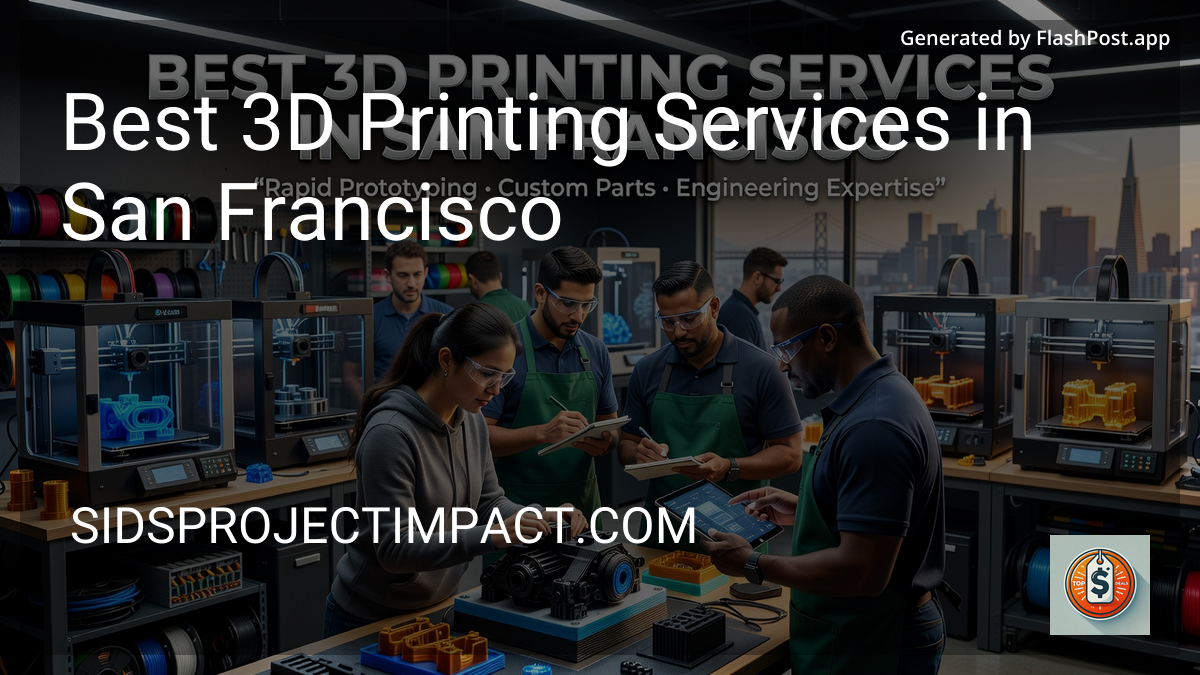
Best 3D Printing Services in San Francisco are easier to find than they were five years ago, but choosing the right one is still where most projects go sideways. In San Francisco, a same-week prototype can cost anywhere from a modest rush fee to several times the standard rate depending on material, tolerance, file prep, and whether you need industrial additive manufacturing or a simple PLA concept model.
🏆 Best 3D Printing Services in San Francisco in September 2026
We researched and compared the top options so you don't have to. Here are our editor's picks.

1. Avdeb 3D Printing Service
- ✅ Custom FDM & resin 3D printing shipped to the San Francisco Bay Area
- ✅ Ideal for tech startups and makers needing fast prototype turnaround
- ✅ Full-color prints, multi-material options, and small-batch production
- ✅ Ships from the US — order online in minutes






That matters because this city has a very specific mix of demand: hardware startups, architecture firms, robotics teams, medical device founders, and artists all compete for machine time. If you upload the wrong file type, choose the wrong process, or send a part that really needs CNC finishing after print, you can lose days and burn through your prototype budget fast.
This guide breaks down the Best 3D Printing Services in San Francisco by use case, budget, speed, and print quality. You’ll also see how to compare SLA vs FDM vs SLS, what to look for in a local rapid prototyping service, and which red flags show up again and again in customer reviews.
How we select services: Our team reviews fabrication providers using a practical shortlist: 4.0+ average customer sentiment where available, material range, turnaround speed, file support, design-for-manufacturing help, quote transparency, and consistency across prototype and short-run production orders. We also weigh whether a service can handle real San Francisco use cases like startup iteration, architectural models, engineering validation, and custom consumer products.
Which are the Best 3D Printing Services in San Francisco for most people?
For most buyers, the Best 3D Printing Services in San Francisco fall into three clear categories:
- Best for fast prototypes: local shops with in-house FDM and SLA capacity plus same-day or next-day quoting
- Best for functional parts: providers offering SLS nylon, resin engineering materials, or reinforced thermoplastics
- Best for polished presentation models: services with strong post-processing, sanding, painting, vapor smoothing, or finishing support
If you need a quick rule: the best overall choice is usually the provider that offers both file review and material guidance before checkout. That single step prevents more failed prints than any spec sheet ever will.
Meanwhile, if your part needs to fit with hardware, survive heat, or take mechanical load, don’t default to the cheapest upload-and-print service. Those are fine for concept models, but they often underperform on tolerance-critical or end-use parts.
How we picked the Best 3D Printing Services in San Francisco
A generic list of print shops isn’t useful, so the shortlist here reflects what actually matters in the Bay Area.
1. Real turnaround time, not just “fast service”
Some providers advertise rush printing, but the real test is whether they can move from file upload to manufacturability review to production in under 24 hours. In practice, the most reliable local services can quote simple parts the same day and ship or schedule pickup within 1 to 3 business days for standard materials.
2. Process range that matches real use cases
The strongest providers don’t force every project into one machine type. They offer some mix of:
- FDM printing for low-cost concept models and larger housings
- SLA 3D printing for high-detail parts, smooth surfaces, and presentation pieces
- SLS 3D printing for functional nylon parts without support marks
- Large-format 3D printing for oversized prototypes or display objects
- Post-processing services like sanding, painting, bonding, and finishing
A service with only one process can still be good. But if they can’t explain why your part should be resin instead of filament, or nylon instead of brittle display resin, that’s a problem.
3. File and design support
The best local options accept common formats like STL, STEP, OBJ, and 3MF, but more importantly, they flag issues before printing. Thin walls under 1 to 1.5 mm, unsupported overhangs, trapped powder cavities, and unrealistic tolerances are where many jobs fail.
4. Review patterns, not just star counts
A 4.8-star score sounds great until you notice only a handful of reviews. The more useful signal is repeat praise for communication, dimensional accuracy, and predictable lead times. On the flip side, recurring complaints about warped parts, unclear pricing, or “looked great in the quote but failed in assembly” should carry real weight.
What types of San Francisco 3D printing services are actually worth paying for?
Not every project needs a premium shop. But the Best 3D Printing Services in San Francisco usually stand out because they solve a specific job better than the rest.
Best for startup prototypes: local rapid prototyping shops
If you’re iterating enclosures, brackets, mounts, or early MVP hardware, local rapid prototyping services give you one huge advantage: speed with feedback. A good shop will tell you if your snap-fit is too aggressive, your wall thickness is too thin, or your tolerance stack is unrealistic before they ever hit print.
This category is often the best fit for:
- Consumer hardware startups
- Robotics teams
- University labs
- Product designers validating form and fit
Best for architectural models: detail-first print providers
Architectural models need something different: clean edges, scale consistency, and attractive finishing. Services with strong SLA output and model assembly support tend to outperform general-purpose filament shops here.
If you’re printing terrain, façades, or massing studies, ask whether the service has experience with sectioned model assembly, support cleanup, and paint-ready finishing. Those three details matter more than raw machine count.
Best for functional engineering parts: nylon and engineering-material specialists
For clips, hinges, ducts, brackets, and housings that will actually be used, SLS nylon or engineering-grade resin is usually worth the premium. Functional parts fail most often because buyers choose the cheapest process rather than the right material.
A strong engineering-focused service should be able to answer: - What load will this part handle? - Will it sit near heat or UV exposure? - Does it need chemical resistance? - Does it need a threaded insert or post-machining?
Best 3D Printing Services in San Francisco by budget
Budget matters, but in 3D printing, the cheapest quote often becomes the most expensive reprint.
Best options for tight budgets and simple parts
If you need a basic prototype, cosplay component, classroom model, or rough concept print, entry-level local services using FDM usually deliver the best value. These are ideal for large, non-cosmetic parts where layer lines and minor support marks aren’t deal-breakers.
Best use cases:
- Early shape studies
- Large mockups
- Simple jigs or holders
- Visual prototypes that won’t be customer-facing
Best budget pick: a local service with clear file checks, standard PLA or PETG options, and pickup availability. That combination keeps cost down without sacrificing basic reliability.
The mid-range sweet spot: where most good projects land
For most buyers, this is the sweet spot. You’ll usually get better detail, more stable materials, and fewer failed prints than bargain options, especially for resin prototypes, small production parts, or polished demo units.
This range is often best for:
- Founder demos
- Investor-ready product mockups
- Fit-check assemblies
- Higher-detail mini runs
Best value pick: the provider that includes orientation review, support strategy, and finishing recommendations in the quote process. Those extras save more money than a slightly lower base rate.
Premium services worth paying for
Premium local fabrication shops make sense when your project needs tight tolerances, multiple material tests, cosmetic finishing, or production-grade repeatability. If you’re printing parts for trade shows, client presentations, or engineering validation, paying more for consistency is usually justified.
Premium providers should offer at least some of the following:
- Engineering consultation
- Dimensional inspection
- Advanced finishing
- Batch consistency for short-run production
- Multi-part assembly or secondary operations
Best premium choice: a service that can move from prototype to low-volume manufacturing without sending you to a second vendor.
What should you look for before ordering 3D printing in San Francisco?
If you’re comparing providers, focus on these six criteria first.
1. Material fit for your actual use case
Don’t just ask what materials they have. Ask which one they’d recommend for impact resistance, outdoor exposure, heat, flexibility, or cosmetic presentation.
A part that sits on a desk has different needs than one mounted near a motor or clipped on and off daily.
2. Minimum wall thickness and tolerance guidance
Good providers publish or explain design rules. As a baseline, many plastic parts print more reliably when walls stay above 1 mm, while precision assemblies may need far more planning around tolerance than first-time buyers expect.
3. Turnaround speed with proofing
Fast is good. Fast with review is better.
If a shop promises next-day completion but offers no design check, you’re taking on more risk. The best services balance speed with a quick manufacturability pass.
4. Finishing options
Raw prints can look rough, especially with visible layer lines or support scars. If appearance matters, ask about: - Sanding - Priming - Painting - Vapor smoothing - Assembly - Insert installation
5. Pickup and local communication
San Francisco buyers often need quick handoffs. A provider with local pickup, responsive quoting, and real human communication is worth more than a slightly cheaper remote option if your deadline is tight.
6. File support and revision flexibility
A strong service should accept standard CAD exports and make small revision cycles easy. If every minor change triggers a slow manual re-quote, your iteration speed drops hard.
Pro tip: For most first-time buyers, sending a STEP file alongside an STL improves quote accuracy and gives the shop more flexibility to spot geometry issues before printing.
What review patterns separate great providers from risky ones?
The fastest way to judge a 3D print service is to read reviews for recurring patterns, not one-off compliments.
Positive signals that usually indicate a reliable service
Look for repeated mentions of: - Dimensional accuracy - Helpful material recommendations - On-time completion - Responsive customer support - Willingness to flag bad geometry before printing - Consistent quality across repeat orders
If several reviewers specifically mention that a provider saved a project by adjusting orientation or wall thickness, that’s a very strong trust signal.
Red flags that show up again and again
Watch for these issues:
- Vague pricing until after file review
- Missed deadlines blamed on “machine issues” more than once
- Fragile parts that crack during normal handling
- Visible warping on larger flat prints
- Poor support cleanup on resin or FDM jobs
- Little guidance on whether SLA, SLS, or FDM is appropriate
A provider that says yes to everything is often less trustworthy than one that pushes back on a bad design. In custom fabrication, honest limitations are a quality signal.
Is a local San Francisco 3D printing service better than ordering online?
For many projects, yes.
A local service usually wins on speed, communication, pickup convenience, and revision cycles. If you’re building a prototype and need to test version A, revise a mounting hole, and pick up version B two days later, local is dramatically more efficient.
That said, online services can still be useful for very simple parts, standardized materials, or lower-cost batch orders. The tipping point is complexity: the more your project depends on fit, finish, speed, or expert feedback, the more local service becomes worth it.
💡 Did you know: Orientation alone can change both surface finish and part strength. The same model printed in a different orientation may look cleaner, support less weight, or require significantly more post-processing.
How to choose the Best 3D Printing Services in San Francisco for your exact project
The right choice depends less on “best overall” and more on what you’re actually building.
If you need a demo-ready visual prototype
Choose a provider with: - SLA or high-detail resin capability - Strong finishing options - Experience with cosmetic presentation parts
This is the best route for presentation models, design reviews, and investor demos.
If you need a working mechanical part
Choose a provider with: - SLS nylon or engineering-grade materials - Experience with tolerance-critical assemblies - Guidance on inserts, hardware, and post-processing
This is usually the best option for brackets, housings, clips, and wearable or moving components.
If you need something cheap and fast
Choose a provider with: - Reliable FDM printing - Transparent quoting - Quick local pickup - Clear size and geometry limits
This works best for early concept iterations, fixtures, and non-cosmetic models.
Frequently Asked Questions
How much do 3D printing services cost in San Francisco?
Costs vary based on material, size, print time, finishing, and turnaround speed. Basic filament prototypes are usually the most affordable, while high-detail resin parts and functional nylon prints cost more because they require more machine time, post-processing, or specialty materials.
What is the best 3D printing service in San Francisco for prototypes?
The best 3D printing service in San Francisco for prototypes is usually a local rapid prototyping shop that offers both fast turnaround and file review. For most product teams, material guidance and design feedback matter more than the lowest quote because they reduce failed prints and rework.
How do I choose between SLA, FDM, and SLS printing?
Use FDM for low-cost concept models, SLA for smooth high-detail parts, and SLS for durable functional components. If your part needs strength and no support marks, SLS is often the best choice; if it needs visual polish, SLA usually wins.
Is local 3D printing worth it for small one-off parts?
Yes, especially if you need quick revisions, same-week pickup, or help checking your file before production. Local services are often worth the extra cost for one-off parts when fit, timing, or communication matters more than absolute lowest price.
What file format should I send to a 3D printing service?
Most services accept STL, STEP, OBJ, and 3MF, but STEP is often best for review because it preserves more design information. If possible, send both a printable mesh file and the original CAD export so the provider can catch geometry issues early.


Comments
Post a Comment